Herbal Supplements For A Healthier Life

Botanical & Identity

Botanical Name

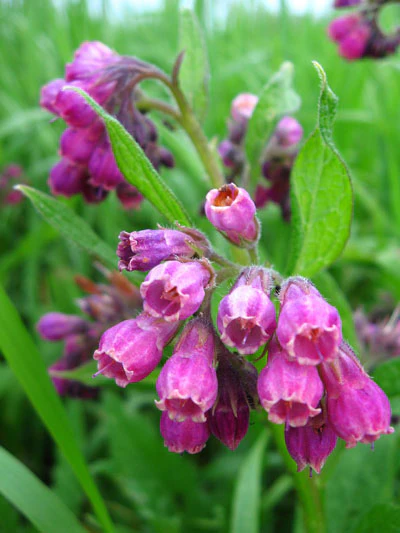
Symphytum officinale

Common Names

Comfrey, Knitbone, Boneset, Blackwort

Plant Family

Boraginaceae

Part Used

Root and leaf (external use primarily)

Taste Profile

Bitter, slightly sweet (root); earthy

Energetics

Cooling, moistening, deeply restorative
Comfrey

Summary & Classification

Short Summary

Comfrey is a powerful cell-regenerating herb used topically to accelerate the healing of wounds, fractures, sprains, and bruises. It contains allantoin, a compound that stimulates tissue repair. Internal use is restricted due to the presence of hepatotoxic pyrrolizidine alkaloids (PAs).

Herb Actions

anti-inflammatory, demulcent, vulnerary

Herbal Category

musculoskeletal & skin healing

Medicine System

western, traditional european medicine

Active Ingredients

Allantoin
,
Mucilage
,
Rosmarinic Acid
,
Pyrrolizidine Alkaloids (PAs – potentially hepatotoxic)
,
Tannins
.

Chemistry & Effectiveness

Active Ingredients

Mechanism of Action

Allantoin promotes cell proliferation and accelerates epithelial and connective tissue repair. Mucilage soothes inflammation, while tannins tighten and protect tissue. PAs, if consumed internally, can damage liver cells.

Modern Applications

Used externally for sprains, bone fractures, bruises, inflamed joints, burns, eczema, and tissue regeneration after trauma.

Traditional Uses & Preparation

Traditional Uses

Known as “knitbone,” Comfrey has a long history in folk medicine for setting broken bones, healing wounds, and calming inflammation. Poultices and compresses were standard remedies in medieval and herbalist practice.

Preparation & Usage

Used topically as a poultice, cream, oil infusion, or compress. Internal use is discouraged unless PA-free extract is verified.

Recommended Dosage

Topical only: apply infused oil, cream, or poultice 2–3x/day. Do not apply to deep wounds or broken skin unless under guidance.

Safety & Warnings

Contraindications

Do not use internally due to risk of liver toxicity (from PAs). Avoid applying to open wounds without professional guidance.

Drug Interactions

None known externally. Internal use may amplify hepatotoxicity with other medications.

Pregnancy & Lactation

not recommended

Side Effects

Rare with external use. Internal PA exposure may cause liver damage if consumed.

Scientific & Source Info

Scientific References

– Staiger, C. (2013). Comfrey: A Clinical Overview. Phytotherapy Research. – EMA HMPC. (2015). Assessment report on Symphytum officinale L.

Sourcing Notes

Wildcrafted or organically grown roots and leaves. Ensure preparations are PA-free when available. Only use reputable suppliers for topical products

Product Linkage

Used In Products

Heartburn & Ulcer capsules

Heartburn & Ulcer 120’s

R440.00