Herbal Supplements For A Healthier Life

Botanical & Identity

Botanical Name

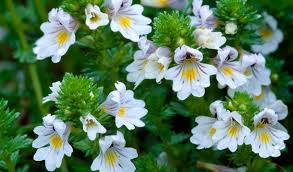
Euphrasia officinalis

Common Names

Eyebright, Euphrasia

Plant Family

Orobanchaceae

Part Used

Aerial parts (above-ground flowering tops)

Taste Profile

Slightly bitter, astringent

Energetics

Cooling, drying, clarifying
Eyebright

Summary & Classification

Short Summary

Eyebright is a traditional European herb used for eye health, sinus infections, and upper respiratory irritation. Known for its astringent and anti-inflammatory properties, it is often used in eye washes, sinus sprays, and hay fever formulas.

Herb Actions

anti-inflammatory, ophthalmic tonic, anticatarrhal

Herbal Category

ophthalmic herb, allergy support, respiratory & sinus support

Medicine System

western, traditional european medicine

Active Ingredients

Iridoid glycosides (aucubin),
,
Flavonoids (apigenin, luteolin)
,
Tannins
,
Caffeic Acid
,
Phenolic Acids
.

Chemistry & Effectiveness

Active Ingredients

Mechanism of Action

The iridoid and flavonoid compounds reduce mucous membrane inflammation, tighten tissues through astringency, and offer mild antihistaminic effects that reduce eye irritation and nasal discharge

Modern Applications

Used for eye strain, conjunctivitis, allergic rhinitis, hay fever, sinusitis, upper respiratory catarrh, and general eye support (topically or internally).

Traditional Uses & Preparation

Traditional Uses

Traditionally used in European herbal medicine for centuries to improve vision, treat eye infections, reduce watery or itchy eyes, and alleviate nasal discharge

Preparation & Usage

Used as a tea, tincture, capsule, compress, or eyewash (with sterile preparation). Often combined with goldenrod or elderflower in allergy formulas.

Recommended Dosage

Tea: 1–2 tsp dried herb per cup, steeped 10 min, 2–3x/day; Tincture: 2–4 ml, 2–3x/day; Compress/Eyewash: 1 tsp herb per cup, strained thoroughly and cooled, use externally (only with sterile water or saline base)

Safety & Warnings

Contraindications

Do not use non-sterile eyewash preparations directly in eyes. Avoid in very dry constitutions without balancing moistening herbs

Drug Interactions

None known

Pregnancy & Lactation

safe

Side Effects

Rare; occasional dryness or eye irritation if improperly filtered in topical use.

Scientific & Source Info

Scientific References

– Samuelsen, A.B. (2000). The traditional uses, chemical constituents, and biological activities of Euphrasia officinalis. – Gruenwald, J. et al. (2004). PDR for Herbal Medicines.

Sourcing Notes

Harvest during flowering season. Should be dried quickly and stored in airtight containers away from light to preserve flavonoids and tannins.

Product Linkage

Used In Products

Eye Health capsules

Eye Health 120’s

R490.00